

Hi, Friends!
It was great to see everyone at the workshop!
You’ve collected tools to help bring out the brave in your team.
Building on the important research of Amy Edmonson, Adam Grant, and many others, here are four key, SAFE skills leaders must develop to unlock the crucial and critical thoughts of their team.
Set the stage
Setting the stage is about communicating the importance of being vocal to the success of the team.
Here's an example of a message you can send your team on the need for psych safety.


Dear team,
As we navigate our work in this dynamic and challenging environment, I want to emphasize the significance of psychological safety within our team. We understand that no single person can tackle the complexities we face alone. Our success hinges on our ability to work together as a cohesive unit.
To achieve this, it's crucial that each one of us feels empowered to speak up. If you encounter a problem, please share it with the team. If a mistake was made, we encourage open acknowledgement. And if you have a fresh idea, we wholeheartedly welcome it.
Remember, we are in this together. Our collective progress and resilience depend on our ability to support one another. Let's foster an environment where we can freely express our thoughts, concerns, and innovative solutions. Together, we can navigate these challenges and thrive.
Thank you for your commitment to our shared success.
Warmly,
Kai


Frame Failure
Conduct a failure audit
Most leaders have unexamined assumptions about failure that impact the way they work. To bring those biases to light, take a few minutes to conduct a failure audit. Think about the last few meaningful failures on your team. How did you handle each one? With the benefit of hindsight, what could you have done better?
Get creative with failure
Creating rituals around your failure philosophy—a practice adopted by some of the world’s most innovative teams—also helps make failure feel less lonely and more instructive. Some examples:


Enable Feedback
Make it a regular habit to address your blind spots by encouraging your colleagues to share feedback in one-on-ones or team meetings. Research shows that psychological safety increases over the long term when leaders are open about their own developmental areas.
Share your backhand: Select one developmental goal you can share with your team.


Gauge
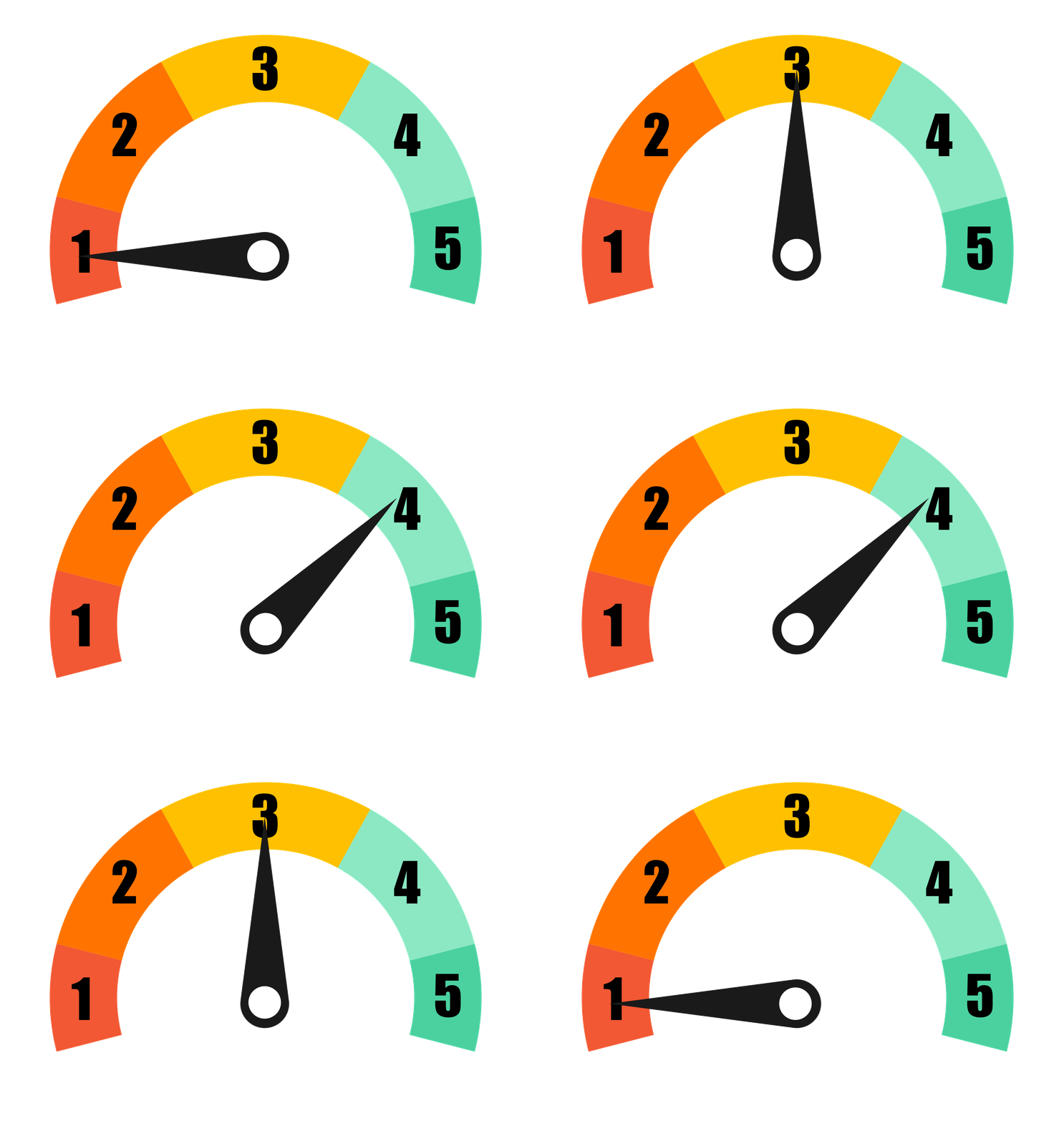
Below is a survey you can use to gauge your team’s level of Psychological Safety. Score how strongly you agree with each statement using a 1-5 scale (1 being low and 5 being high).
- If I make a mistake on this team, it’s held against me.
- Members of this team can bring up problems and tough issues.
- People on this team sometimes reject others for being different.
- It’s safe to take a risk on this team.
- It’s difficult to ask other members of this team for help.
- No one on this team would deliberately act in a way that undermines my efforts.
- Working with members of this team, my unique skills and talents are valued and utilized.
Discuss
Once you survey your team, set a time to discuss the results. Potential steps include:
Co-create change:
“Here are our two lowest scores. Let’s discuss what these mean to you and brainstorm ways to improve.”
Articulate commitments:
“Here’s what I want to commit to doing and here’s how I’d
like to be held accountable.”
Assign team members to a project:
“Who would like to spearhead our new 'Failure Sucks, but Instructs' initiative?”
Collect Feedback:
“It’s been a month since we tried X. I would love to get feedback from the team on what’s working well and what could be improved. What should we start doing? What should we stop doing? What should we continue doing?.


Deepen your learning


As always, we would love to hear from you. You can reach us at hello@nextarrow.org or connect with us on LinkedIn
